
It's What We're Known For
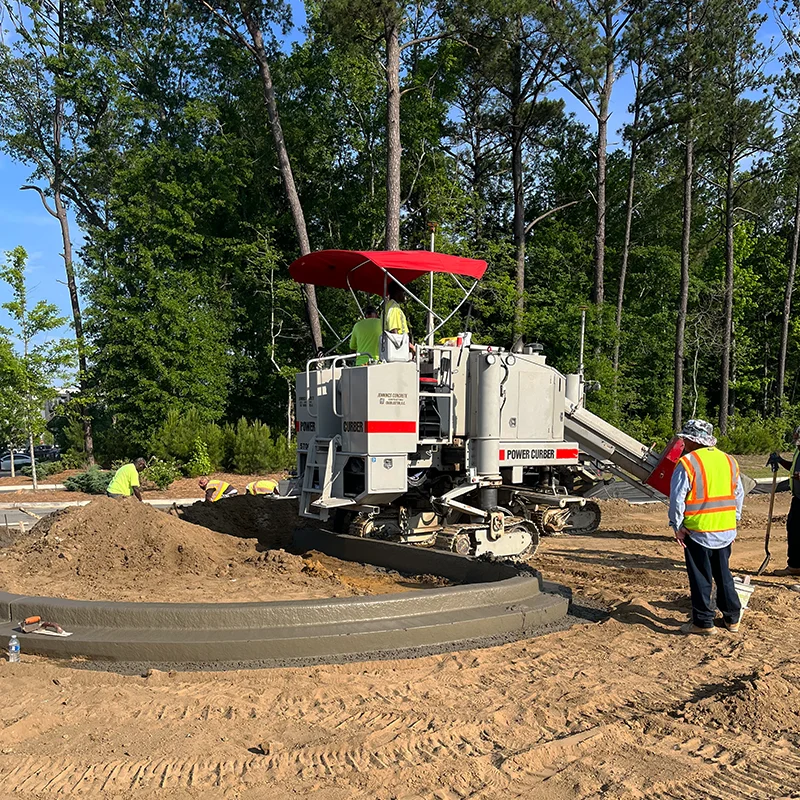
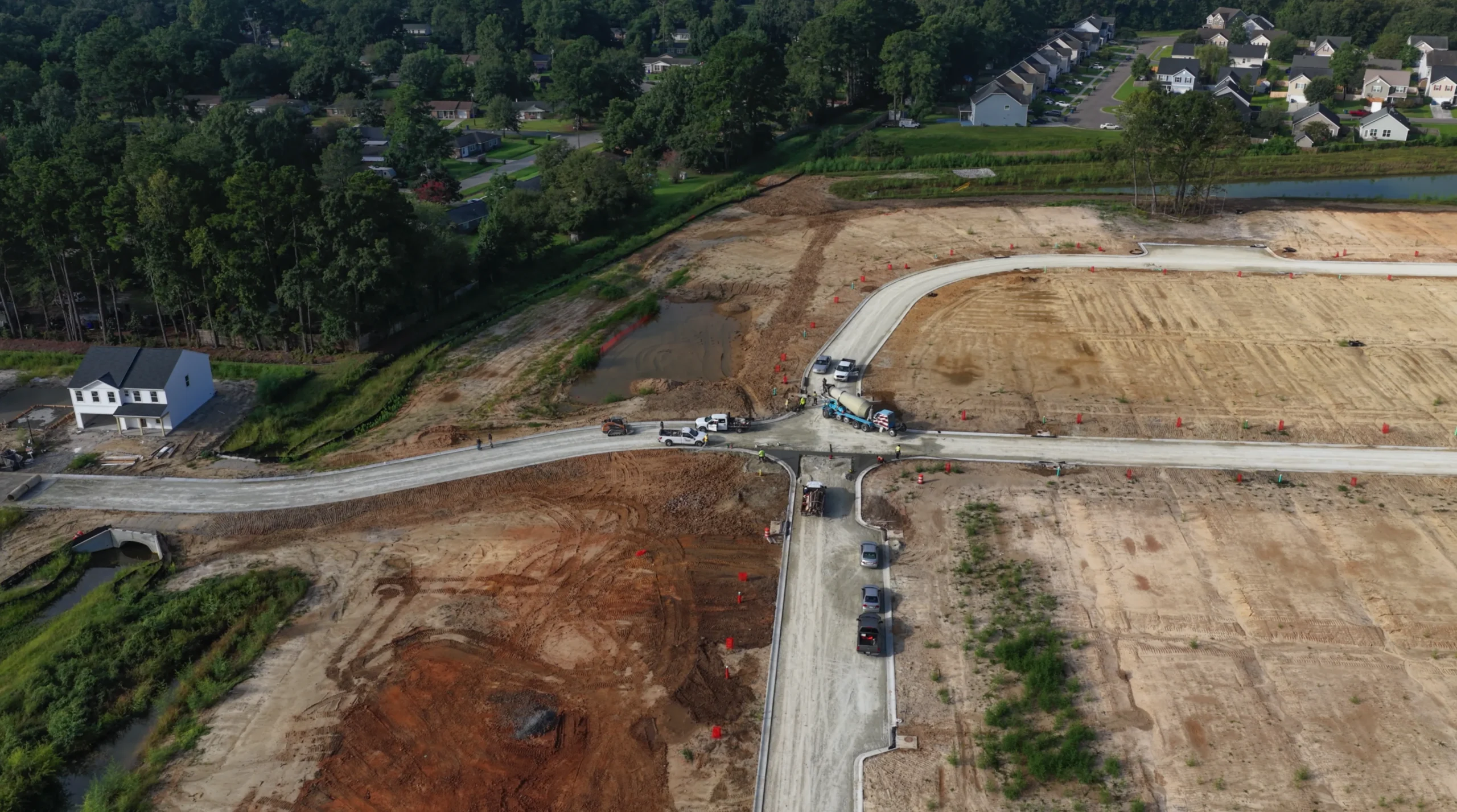
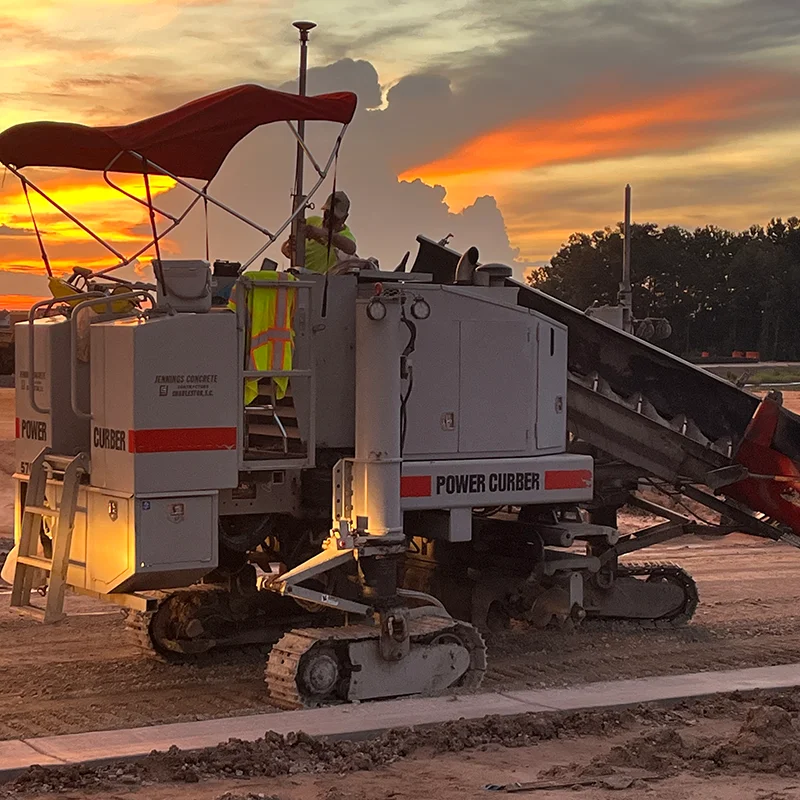
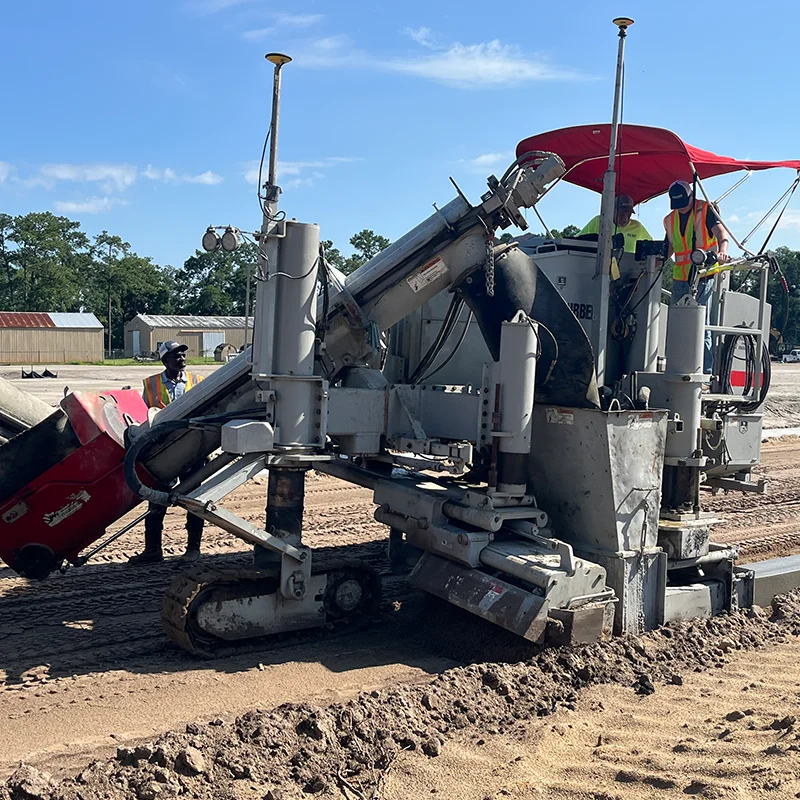
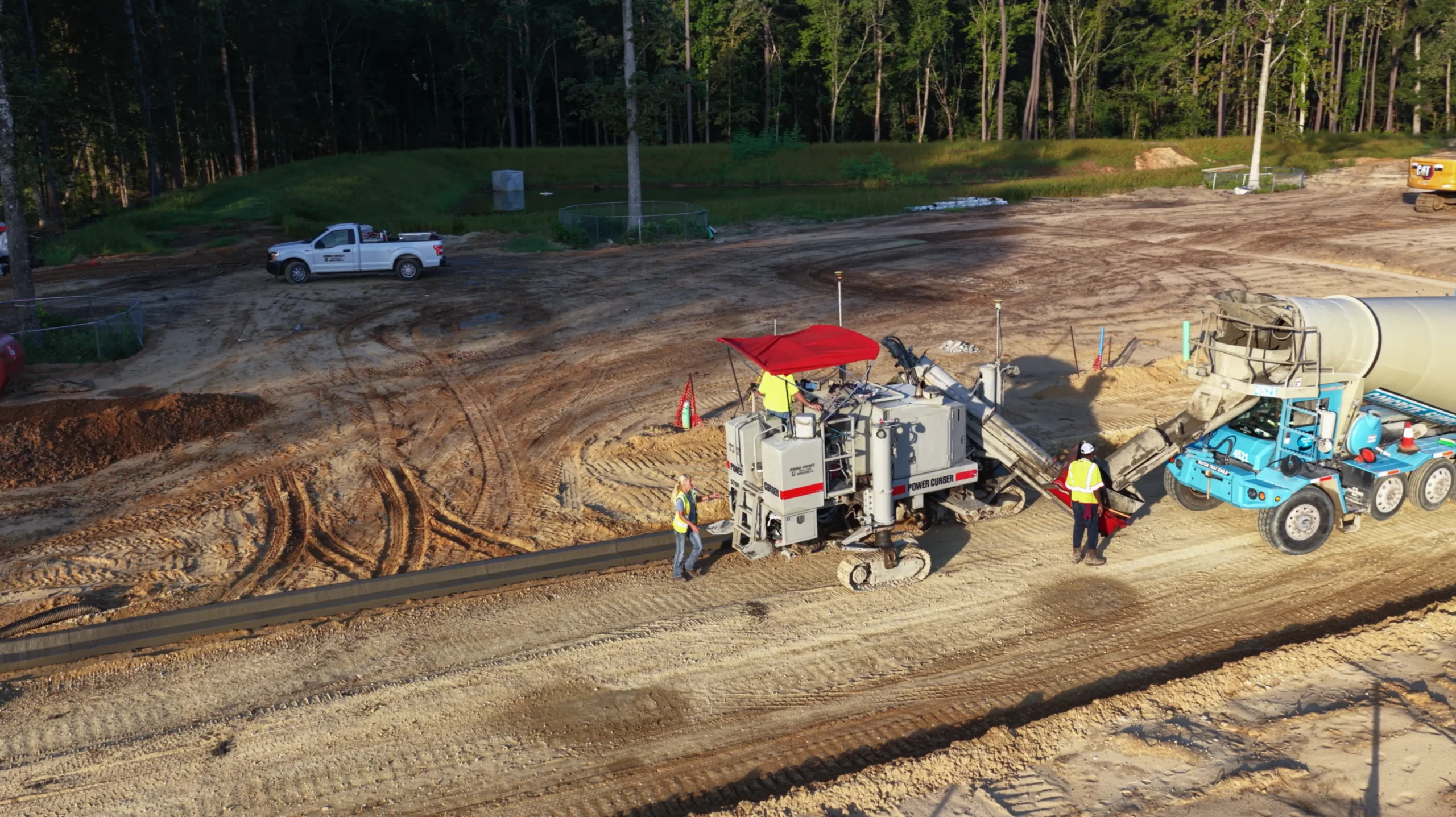
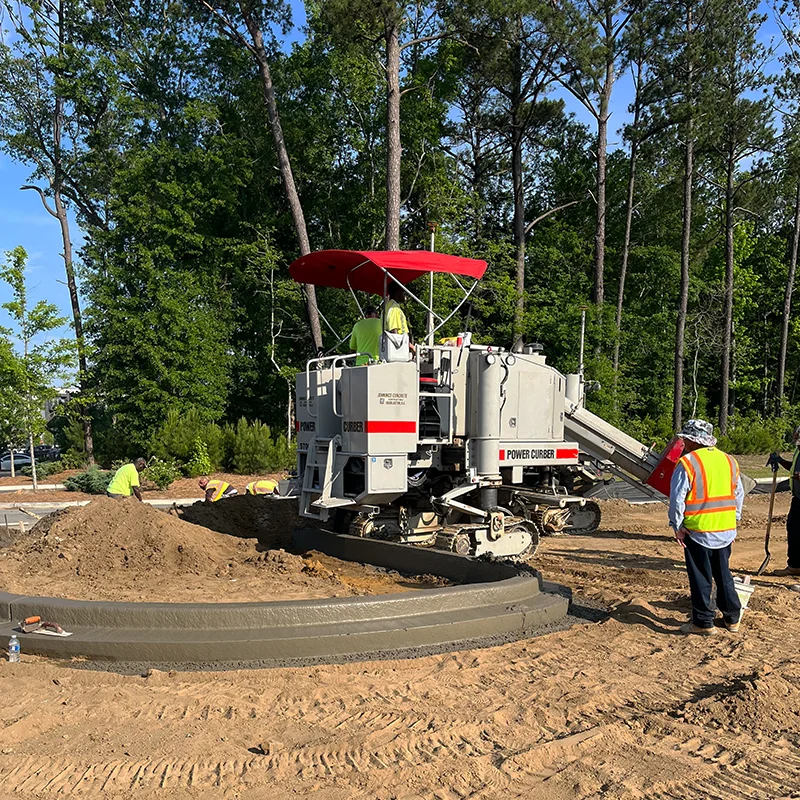
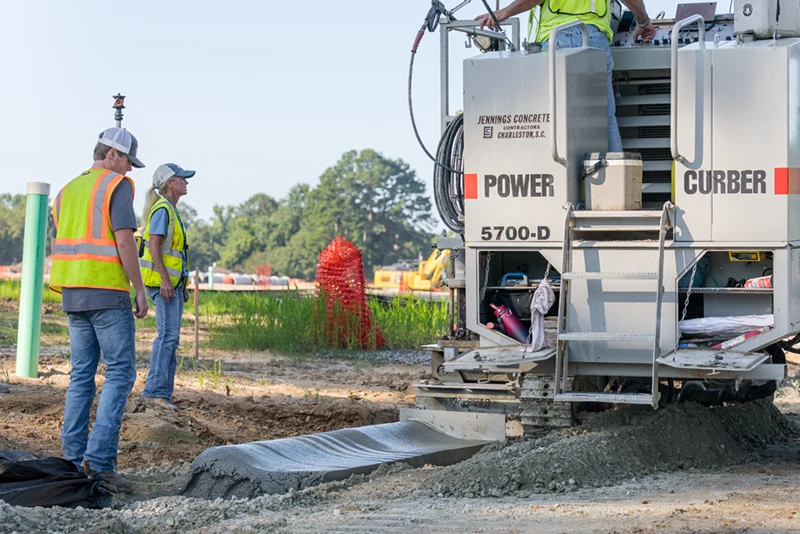
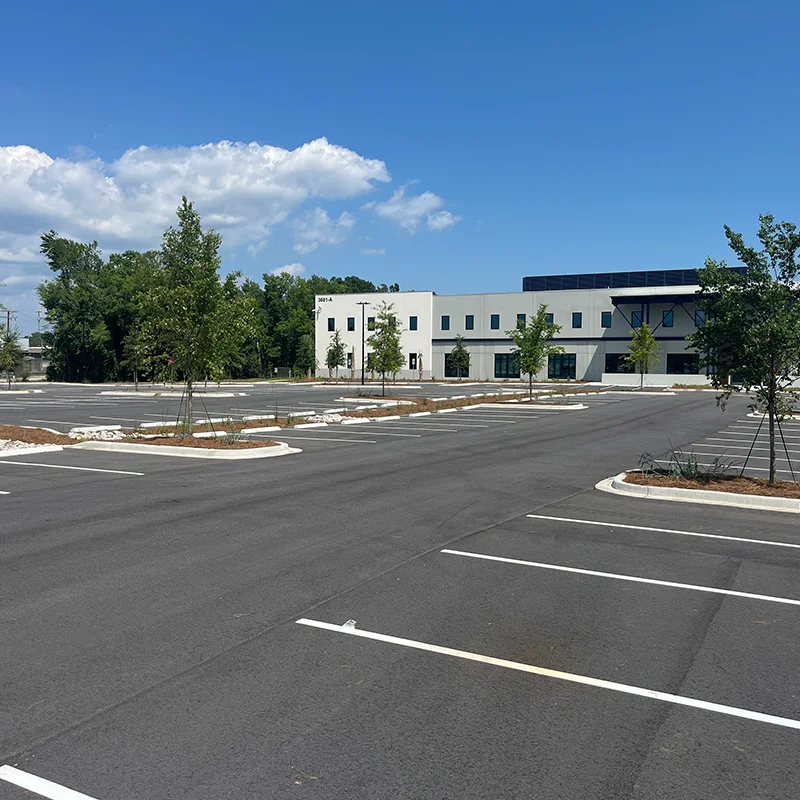
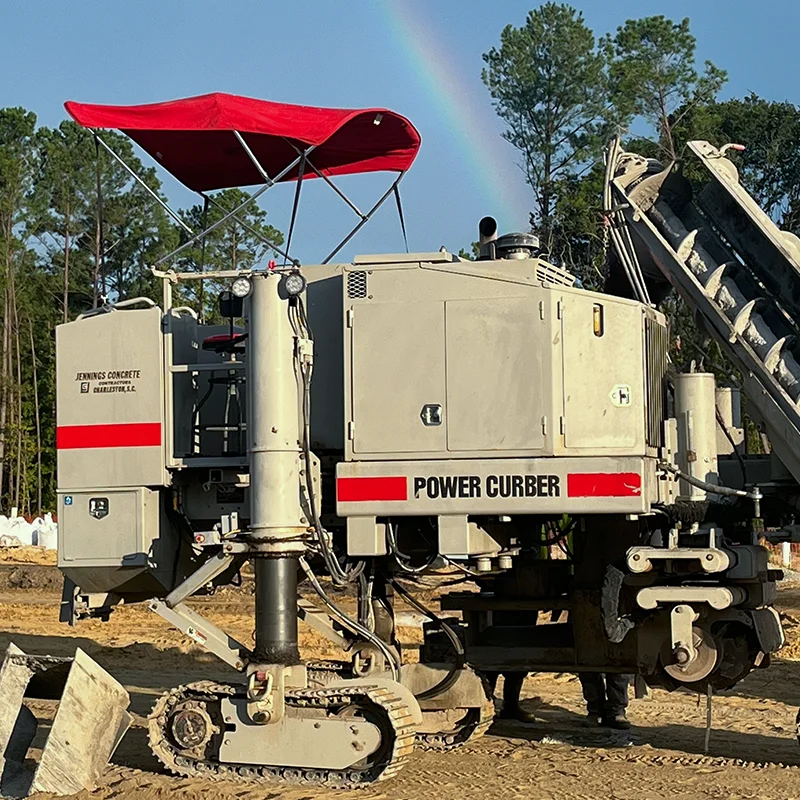
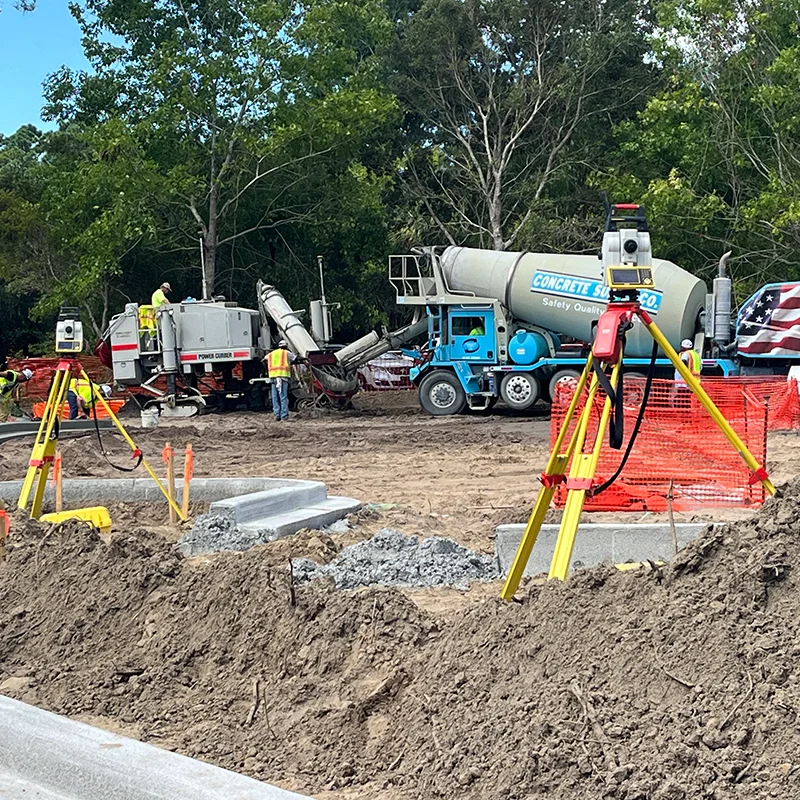
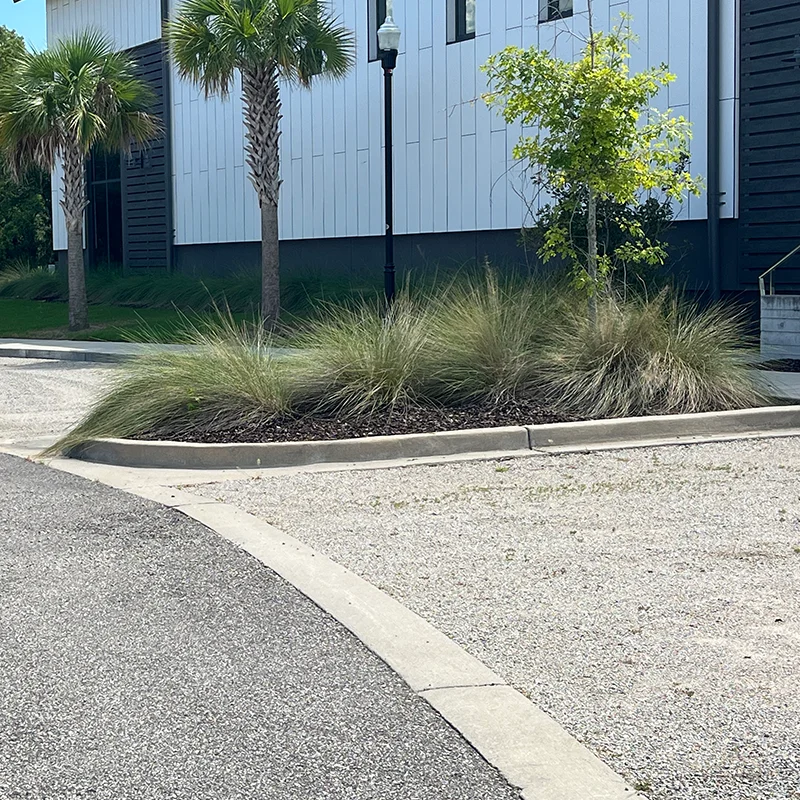
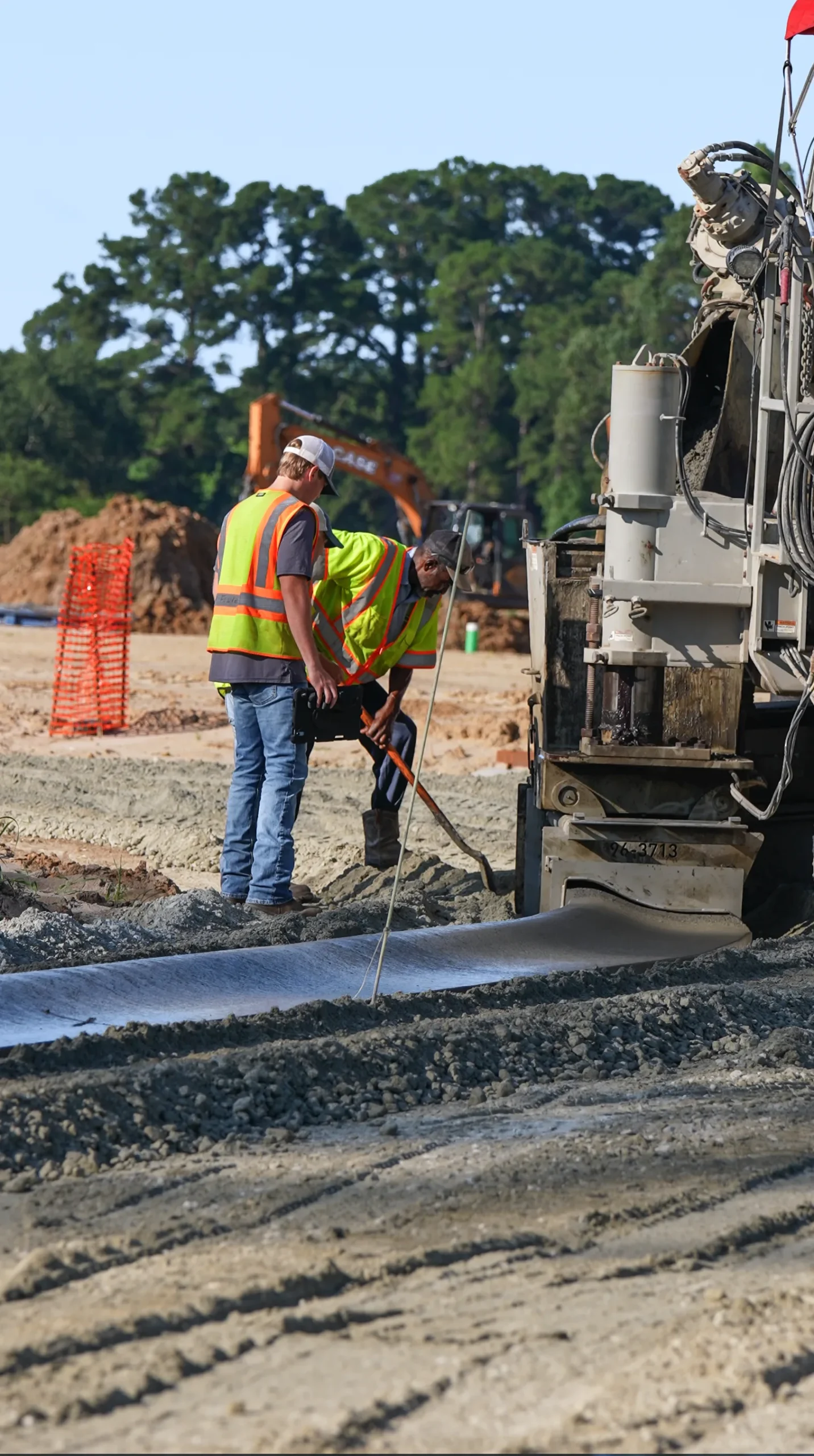
Curb and gutter has been a core part of Jennings Concrete’s work for decades. We install commercial curb for site development projects throughout Charleston and the surrounding Lowcountry using GPS-guided Power Curber slipform placement as our primary method, with hand forming used where machine placement is not practical.
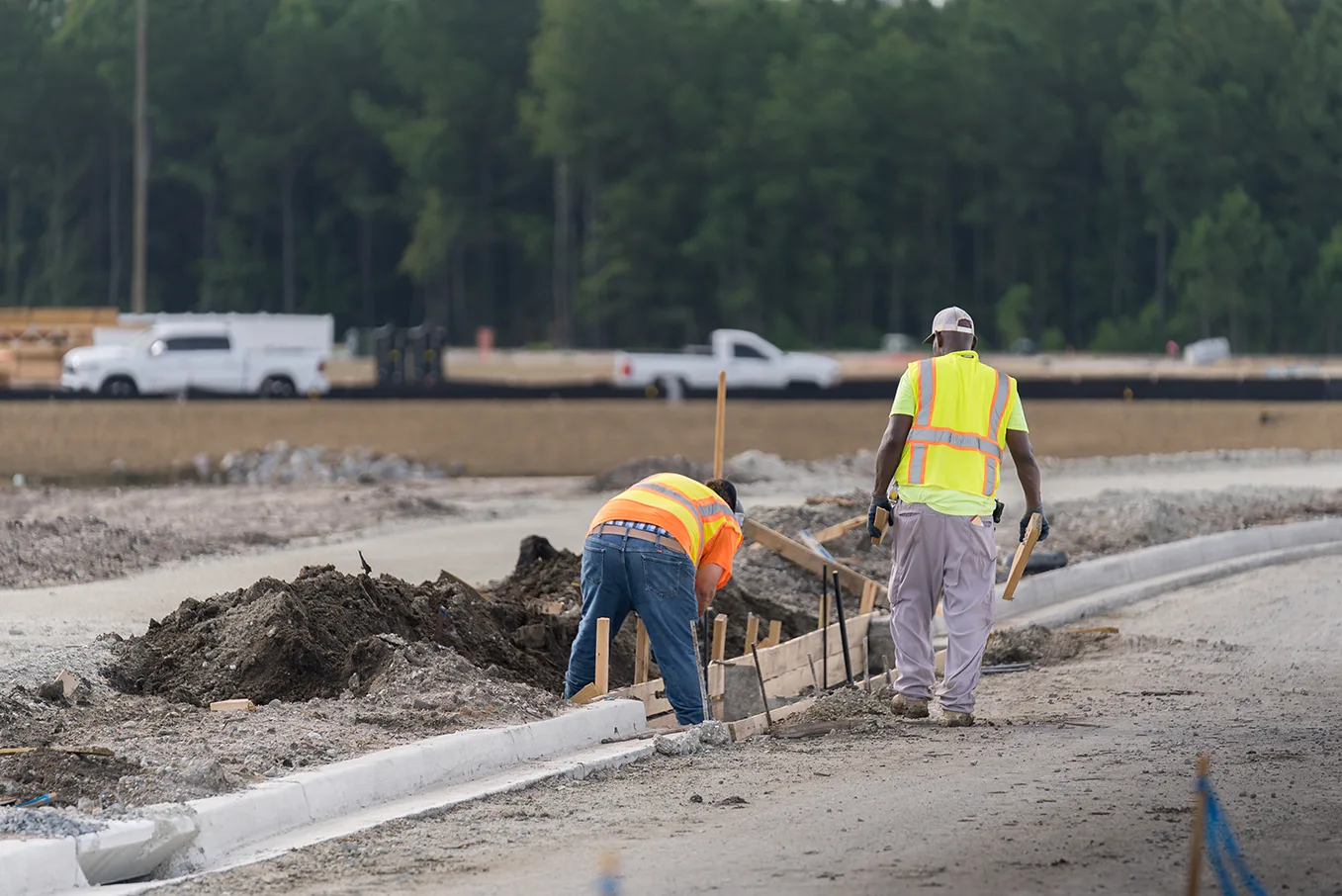
The decision is based more on the overall quantity of curb than the length of an individual run. A parking lot may have dozens of short, cut-up sections and still make sense for machine placement because of the total footage involved. Hand forming is generally reserved for tie-ins the machine cannot place and smaller jobs, typically those with less than about 600 linear feet of curb.
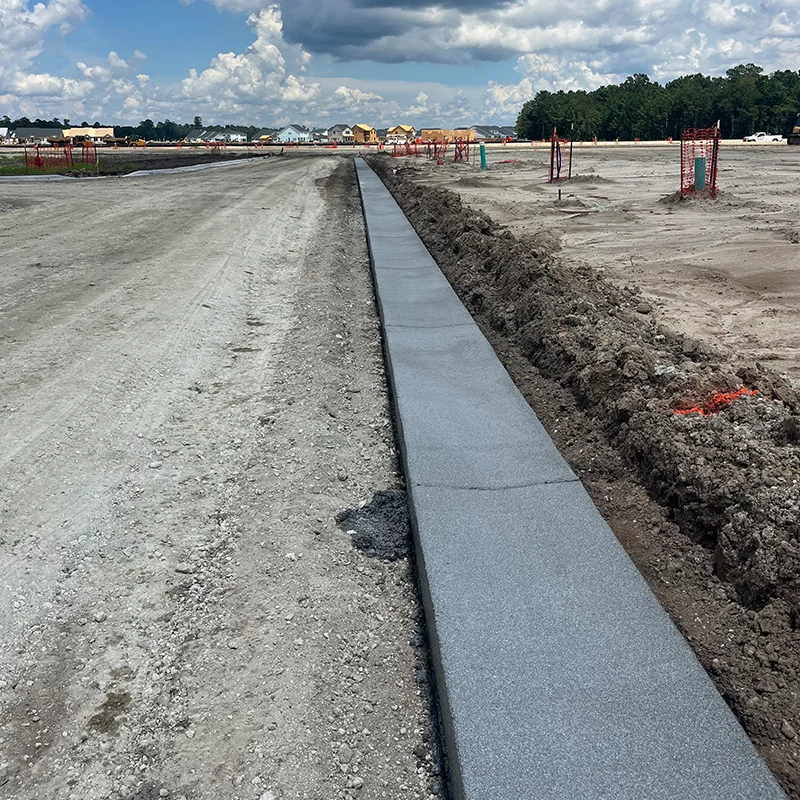
Whichever method is used, the curb has to follow the required line and grade and be ready for the work that ties into it next.
Power Curber Slipform Placement
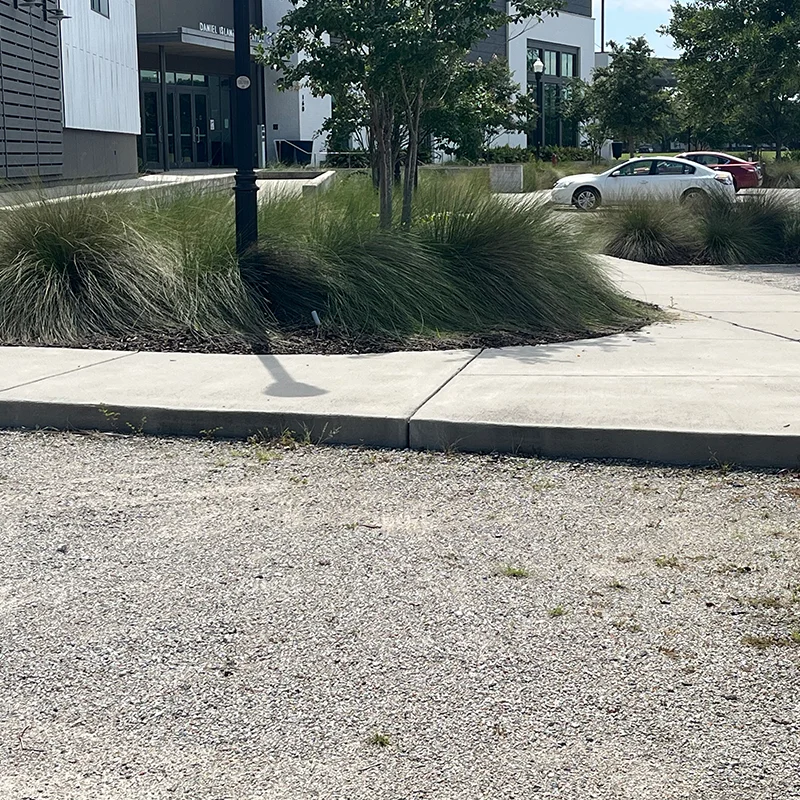
For projects with enough overall curb footage, Jennings uses GPS-guided Power Curber slipform equipment to place curb efficiently and consistently. Parking lots and other sites with numerous shorter sections are well suited to machine placement when the total quantity supports it. Our mold inventory allows us to install a range of profiles commonly shown on commercial and site development projects, including:
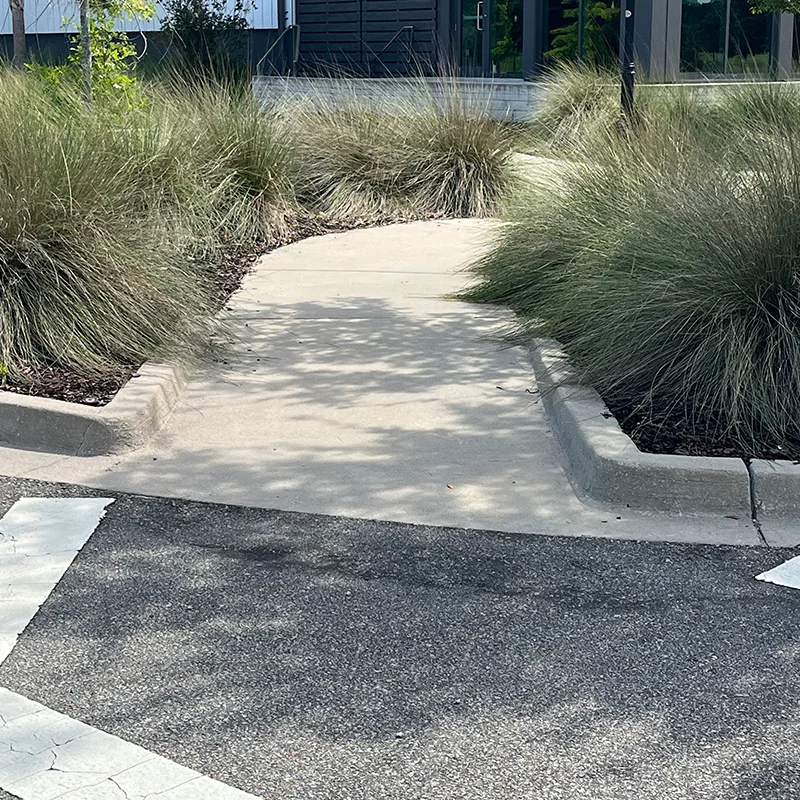
- Curb and gutter
- Roll curb
- Vertical curb
- Valley gutter
- Ribbon curb
Hand-Formed and Installed Curbing
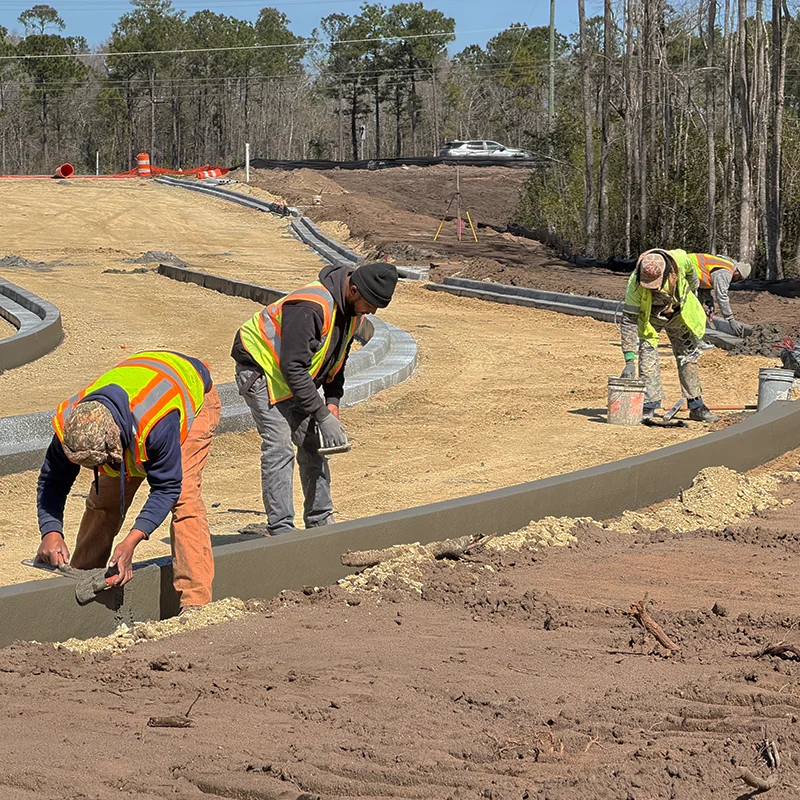
Jennings reserves hand-formed curb primarily for tie-ins and other locations that cannot be placed with the curb machine, as well as smaller jobs where the overall quantity does not justify machine placement. As a general guideline, projects with less than about 600 linear feet of curb are typically candidates for hand forming.
curb and gutter
GPS-Guided Curb Operations
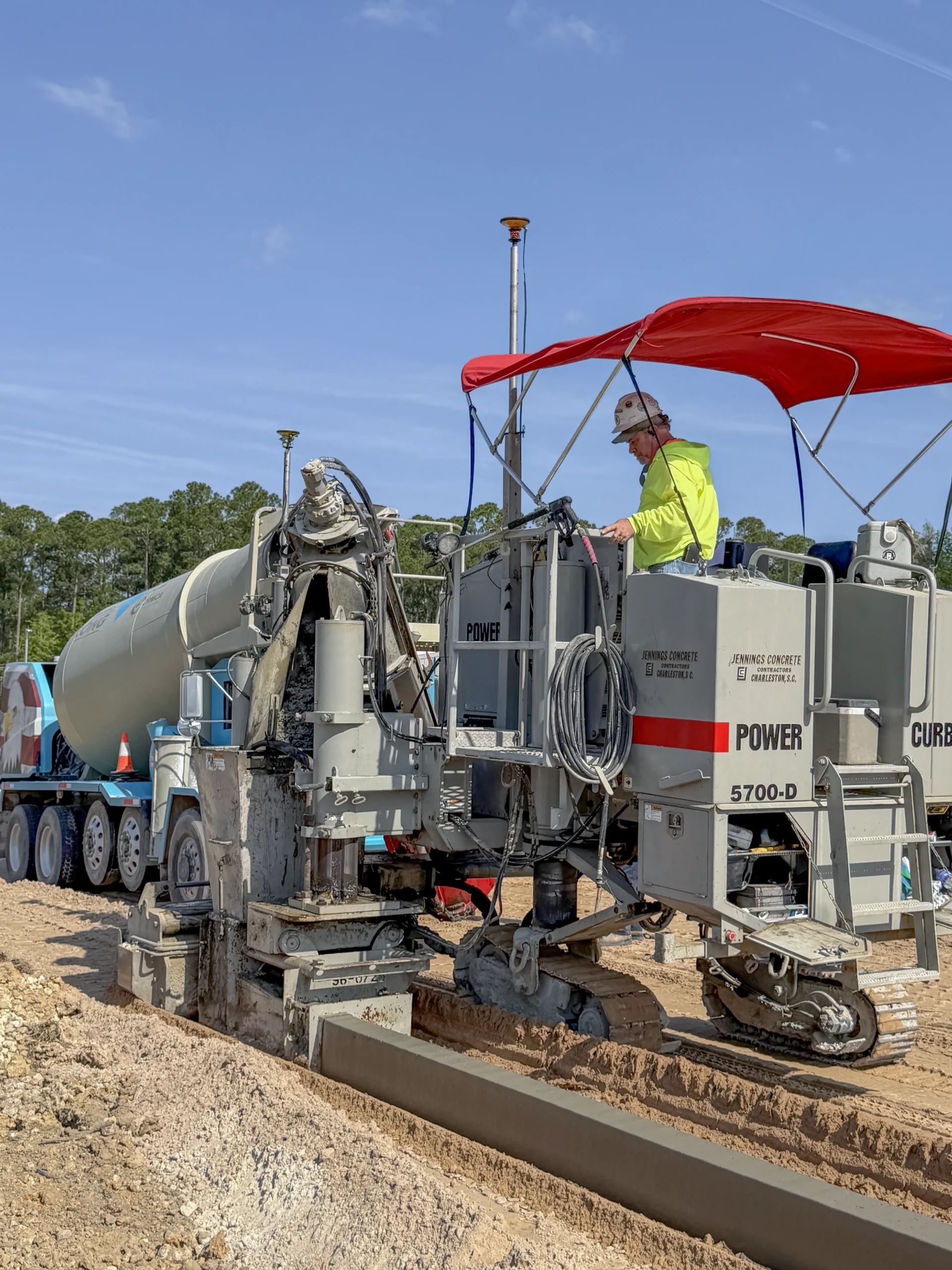
All curb placed with Jennings’ Power Curber is installed using GPS machine guidance. This allows the curb operation to follow the project model for line and grade throughout machine placement.
The contractor may provide the project model, or Jennings can furnish one for an additional fee when needed. Establishing model responsibility during estimating helps make sure the curb operation is ready before work begins.

curb and gutter faqs
Questions Before the Work Starts
Let's Pour
Have Curb and Gutter in an Upcoming Bid?
Send us the project information, plans and anticipated quantities. We’ll review the curb scope, determine the appropriate installation approach for the work, and provide a quote in five business days or less.